
The Proposed Alternative Hotel Lending Platform
A sketch of a credit model, written by a student who has worked in hotels.
A proposed lending model for hotel and motel owners whose situation does not fit a spreadsheet template. Developed as part of a Master's capstone in entrepreneurship, the full method is published here in the open for review and critique.
On the pathway · in my own voice
This is the part people ask about first: what happens after the method says yes.
I am not writing the cheque. I am describing the route a deal of this size would have to travel to find one.
It is a research design. Read it as a proposal, and hold it to the standard of one.
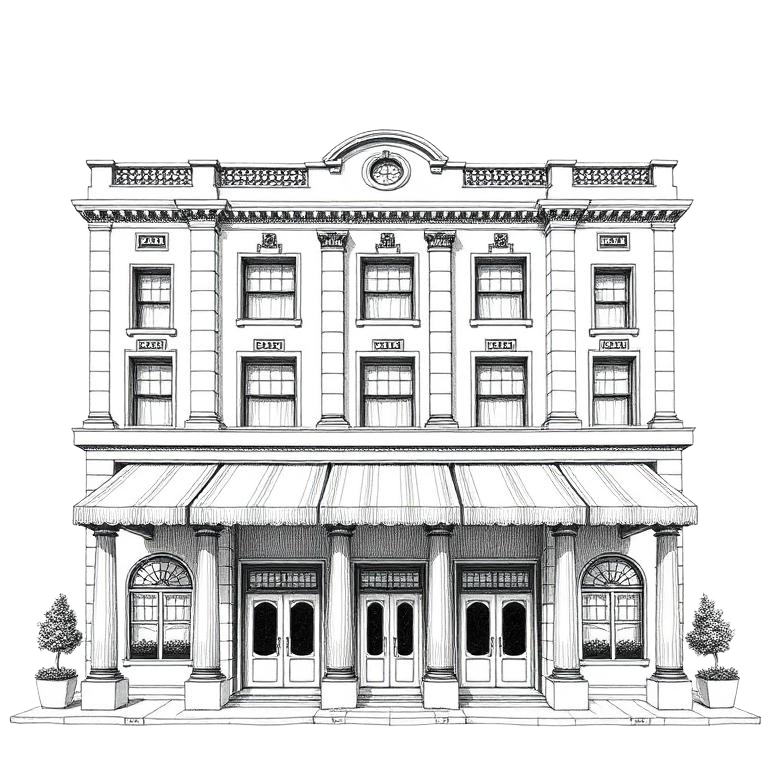
Four Pillars
One imagined underwriting spine, four functions.
Origination, structuring, credit judgment, and asset-level intelligence are not separate departments here. They are one continuous read of the same asset.
- 01
Originate
Deals come from operators, brokers, and owners who need a lender that can read a hotel P&L without a translator.
- 02
Underwrite
The asset is normalized and interrogated before any structure is discussed. The numbers set the shape of the deal, not the other way around.
- 03
Structure
Terms are built around the actual situation — repositioning, transition, or a partner problem — rather than pushed into a standard box.
- 04
Steward
A funded loan is the start of a relationship with an operating business. The sketch imagines staying close to the asset through the business plan.
Go Deeper
Read the sketch in full.
Four pages, written as coursework. Read them in order or start where your question is.
How It Works
The six stages a deal moves through
From first conversation to committed structure, with what is required at each stage.
Read how it works →Where the sketch would fit
Situations built for, and not
The asset types and owner situations this platform understands — and an honest list of where it does not.
See the criteria →Underwriting Method
How every assumption is tested
The eight-discipline framework applied to market, financials, downside, exit, and risk.
Read the method →Owner Questions
Plain answers, no hedging
Timing, documents, brand impact, decision-making, and what happens if the deal is not ready.
Read the answers →

Applied Intelligence
Intelligence where it compresses judgment cycles — never where it replaces them.
Document Compression
Offering memoranda, franchise agreements, and years of operating statements are read and cross-referenced in hours instead of weeks.
Pattern Recall
Comparable situations would surface from a written record rather than from memory — an idea about process, not a system that exists.
Human Verdict
No model issues a credit decision. Intelligence sharpens the questions; a person answers for the outcome.
Models read documents faster than people. They do not carry the consequence of being wrong. That stays with us.
Investor questions
Questions a student anticipates about the sketch.
Imagined answers about how a proposed model might be structured and who it might be imagined for. No capital partners exist, no owner is eligible for anything, and none of this is on offer.
Remit
A hospitality-only credit platform for situations conventional lenders decline on process rather than merit. The sketch would read the asset and the operator directly, structure around the business plan, and stress-test the exit before we commit.
Selected work
Hypothetical scenarios, invented for coursework
These are illustrative situations written by a student to explain an idea. They are not deals, not clients, and not outcomes — nothing described here happened.
- Scenario 01
Bridge to reposition a tired exterior-corridor motel
Secondary market · 62 keys
Owner-operator held the asset free of institutional debt but needed capital to convert to a national economy brand before a franchise deadline. Bank timeline was 90+ days; the PIP window was 45. The scenario imagines that it underwrote the operator and the completed-brand value rather than trailing statements, and funded a short-term bridge with an interest reserve carved out for the renovation period.
- Structure
- 18-mo bridge
- Speed
- 21 days to close
- Exit
- agency refi
- Scenario 02
Partner buyout at a family-owned independent inn
Coastal leisure market · 34 keys
Two of four family partners wanted out. Conventional lenders balked at the ownership change and seasonal revenue curve. Underwriting focused on peak-season cash conversion, the remaining operators track record, and a debt service reserve sized to the shoulder months.
- Use
- partner buyout
- LTV
- 63%
- Term
- 24 mo, IO
- Scenario 03
Discounted note payoff on a franchised select-service hotel
Interstate corridor · 88 keys
A legacy CMBS loan sat in special servicing after a soft two-year RevPAR stretch. The owner had a discounted payoff on the table with a hard expiry. The scenario imagines moving on the payoff economics and the sponsors operating plan, not the historical dip, and closed inside the servicer window.
- Trigger
- DPO deadline
- Speed
- 26 days
- Outcome
- equity preserved
- Scenario 04
Ground-up conversion of a vacant office block to extended stay
Growth metro · 110 keys
Sponsor controlled the building and entitlements but the construction lender required more equity than the sponsor wanted to give up. The scenario imagines structuring senior plus a stretch piece against completed value, with draw controls tied to third-party inspections.
- Structure
- senior + stretch
- Draws
- inspection-tied
- Stabilization
- 14 mo
- Scenario 05
Cash-out to fund a second acquisition
Mountain resort market · 45 keys
Stabilized asset with strong ADR and low leverage. The owner needed proceeds fast to compete on a second property against an all-cash buyer. Cash-out bridge funded ahead of the competing offer, then refinanced into fixed-rate long-term debt on both assets.
- Use
- acquisition capital
- Proceeds
- 55% LTV
- Refi
- 9 months later
- Scenario 06
Franchise-mandated PIP with a lender in place
Airport submarket · 74 keys
Existing lender would not advance renovation dollars, and the brand PIP deadline was firm. The scenario imagines providing subordinate capital sized to the scope, with a completion guaranty and a defined take-out at brand re-inspection.
- Position
- subordinate
- Scope
- full PIP
- Result
- flag retained
Illustrative only. Terms shown are indicative and not an offer of credit.

Send a note
A student's note, not a scenario submission.
This is a conversation about coursework. No asset is reviewed, no fit answer is given, and no term sheet exists — write if you want to tell me where the thinking is wrong.
BBMG Miles Greve — coursework summary
The capstone question, on one page.
The question, the reasoning, and the eight-step sketch on a single page — a student summary written for discussion and critique. Not an offer, not a solicitation, and not vetted work.